

Canberra Monthly Parking Guide: Civic, Barton & Braddon Options
Find monthly parking in Canberra’s Civic, Barton and Braddon. Compare parking options, costs, locations and tips for commuters, residents and visitors.

 Written by:
Louise is an SEO Writer for Spacer Technology, creating content for the Parkhound, WhereiPark, Spacer.com.au, and Spacer.com brands. Based in the Philippines, she transitioned from her government office job to copywriting in 2012 and has stayed in content production since.
 Edited by:
The Spacer Technologies content team is a dedicated group of writers and experts with a deep-rooted passion for the sharing economy. Our team is committed to creating informative, engaging, and valuable content across our various platforms. With a keen eye for detail and a talent for simplifying complex topics, we strive to empower our audience with knowledge and insights about the benefits of shared spaces.
Planning a road trip in Australia? Get practical parking tips for leaving your car safely before you go and finding convenient spots along the way.

Key Takeaways:
Road trips remain a popular way to explore Australia, particularly when travelling to regional destinations. In 2025, Australians took a record 17.3 million domestic caravan and camping trips, with travellers spending 57.9 million nights away. Around 87% of those nights were spent in regional Australia, according to Tourism Research Australia. With so many travellers heading out on the road, parking is one of the practical details worth considering before you set off.
Your parking needs can vary depending on your plans. You might need a secure place to leave your car while travelling interstate, a suitable spot for a campervan or caravan, or convenient parking near your accommodation and attractions.
It’s also worth planning ahead if you’re travelling during busy holiday periods, as popular destinations can have limited parking. Some areas also have restrictions on vehicle size, overnight stays or how long you can leave a vehicle unattended. This means the right parking option will depend on your vehicle, itinerary and how long you’ll be staying.
Knowing what to look for before you leave can help you avoid unnecessary delays and make it easier to enjoy the trip once you’re on the road. For some travellers, that means finding somewhere secure to leave the car before setting off. For others, it means planning where the vehicle can be parked at each destination along the way.
If you’re using a campervan or caravan for your trip, whether you own or hire one, you’ll need to decide what to do with your everyday car first since you can’t take both vehicles with you. Leaving your car at home may seem like the easiest option—and in many cases, it is. But it’s worth checking whether your home is suitable for leaving the vehicle unattended for the length of your trip.
Can You Leave Your Car at Home?
If you have a secure garage or off-street parking, leaving your car at home is the simplest and most affordable option. It can also give you peace of mind if you have someone nearby who can check on it while you’re away.
If your car normally stays on the street, however, check whether local parking rules allow you to leave it there for several days. Time limits and other restrictions can apply, so check the rules for your area before you go. Queensland, for example, has parking restrictions that can depend on signs and the type of vehicle.
What If You Live in an Apartment or Rental Property?
Your housing arrangement can affect where you can leave your car. If you live in an apartment, townhouse or other strata property, check your building’s parking by-laws before leaving your vehicle in an allocated or shared space over an extended period.
If you’re renting, check your tenancy agreement and speak with your property manager if you’re unsure about your parking arrangements. You may be allowed to park there normally, but there could be conditions around how long your car can remain parked without being moved. This is worth checking before leaving for a 10-day or two-week trip.
When Is a Parking Facility a Better Option?
If your home parking isn’t secure or suitable for a longer absence, a dedicated parking or vehicle storage facility may be worth considering. Compare the security, access arrangements, cost and distance from your home or campervan rental depot.
Convenience matters too. If you’ll be collecting the campervan from a rental depot, choosing a parking facility nearby could make the start and end of your trip much easier.
Once you’ve worked out where your everyday car will stay, the next consideration is where you’ll park the campervan or caravan during the trip.
Once you’re on the road, parking becomes part of the planning for each stop on your itinerary. If you’re driving your regular car and staying at hotels, cabins or short-term rentals, you’ll need to consider where you can leave the vehicle while you’re at your accommodation or exploring the area.
The same applies to travellers using a campervan or caravan, although larger vehicles can come with additional parking considerations. Some destinations may have designated spaces or restrictions on vehicle size, while others may not have suitable parking at all.
If you’re driving your regular car and staying at an Airbnb, cabin or hotel, it’s worth checking the parking arrangements before you book. Having accommodation at your destination doesn’t necessarily mean you’ll have a convenient place to leave your car.
Start by checking whether parking is included and where you’ll actually be able to park. Some properties have dedicated on-site spaces, while others rely on street parking, shared spaces or a separate car park nearby. If parking isn’t clearly mentioned in the listing, contact the accommodation provider before booking rather than finding out after you arrive.
Hotels may charge an additional fee for parking, even when parking is available on the property. Check the hotel’s parking rates and whether spaces are guaranteed or available on a first-come, first-served basis. For Airbnb and cabin stays, confirm the arrangement with the host, particularly if the property has a shared driveway or limited parking.
It’s also worth considering the size of your vehicle. A standard car may fit comfortably in most spaces, but larger SUVs, utes or vehicles with roof racks may have trouble with narrow driveways, low clearances or tight parking areas. Check the dimensions and access arrangements in advance if you’re travelling in a larger vehicle.
Finally, think about how you’ll use the car once you arrive. If you’ll be leaving it at the accommodation for several days while exploring on foot or using local transport, make sure the parking arrangement allows for a longer stay. Knowing this ahead of time can save you from having to move the car unnecessarily during your trip.
Travelling in a campervan or caravan gives you more flexibility with where you stay, but it also comes with different parking requirements. A space that’s suitable for a regular car may not have enough room for a larger vehicle, or may not allow overnight stays.
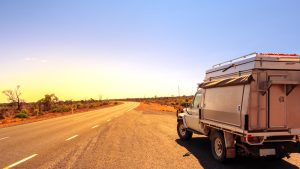
Look for designated campervan, caravan or motorhome parking where available, and check the vehicle requirements before you arrive. Some sites may have limits on vehicle length, height or weight, while narrow roads, low-clearance structures and tight entrances can make certain areas difficult to access.
It’s also important to check whether overnight parking is permitted. A car park that allows you to leave your vehicle during the day doesn’t necessarily allow you to stay overnight in it. If you’re planning to sleep in your campervan, check whether the site is a designated camping area or approved overnight parking location. The Campervan & Motorhome Club of Australia (CMCA) recommends following local signage and obtaining any required permission before staying overnight.
The facilities available can also make a difference to your choice. Depending on your setup and itinerary, you may want access to powered sites, toilets, water or waste disposal facilities. These aren’t available at every parking area, so check what the site provides before making your plans.
Finally, consider how easy the location will be to enter and leave. This can be particularly important in older town centres, narrow streets and busy tourist areas where larger vehicles may be harder to manoeuvre. For popular destinations, researching suitable sites and booking ahead can save you from having to find a space after you arrive.
With your vehicle and accommodation sorted, the final step is to check the parking rules and practical details that apply to any spot you choose.
Once you’ve narrowed down your parking options, a few practical checks can help you decide which spot is actually suitable. A convenient location isn’t much use if you can’t legally leave your vehicle there or if getting in and out is difficult. Before parking, consider the following:
Finally, check the local parking signs and regulations rather than relying solely on an online listing or assumptions about what is allowed. Parking rules can vary between councils, properties and facilities, and signs at the location may contain restrictions that aren’t obvious from a general directory or map.
With these checks in mind, you’re in a better position to choose a parking spot that fits both your vehicle and your plans, rather than simply choosing the first available space.
Parking may not be the first thing you think about when planning a road trip, but sorting it out early can make the journey easier from the start. Knowing where your everyday car will stay, where you’ll park at each destination and what restrictions apply means fewer surprises once you’re on the road.
A little planning is particularly useful when travelling during busy periods, when popular accommodation and parking areas can fill up quickly. Check the parking arrangements before you book, confirm local rules where necessary and give yourself enough time to find alternatives if your first choice isn’t suitable.
With your parking plans sorted, you can spend less time worrying about where to leave your vehicle and more time enjoying the road ahead.
Louise is an SEO Writer for Spacer Technology, creating content for the Parkhound, WhereiPark, Spacer.com.au, and Spacer.com brands. Based in the Philippines, she transitioned from her government office job to copywriting in 2012 and has stayed in content production since.
Louise is an SEO Writer for Spacer Technology, creating content for the Parkhound, WhereiPark, Spacer.com.au, and Spacer.com brands. Based in the Philippines, she transitioned from her government office job to copywriting in 2012 and has stayed in content production since.
Find monthly parking in Canberra’s Civic, Barton and Braddon. Compare parking options, costs, locations and tips for commuters, residents and visitors.
Drive safely this winter with practical driving and parking tips for Australian cities. Learn how to handle wet roads, fog, frost, and changing weather conditions.
Wondering whether you need monthly parking or self-storage? Compare costs, use cases, benefits, and find the best solution for long-term vehicle parking or extra storage in Australia and beyond.
This will close in 0 seconds
This will close in 0 seconds