

Canberra Monthly Parking Guide: Civic, Barton & Braddon Options
Find monthly parking in Canberra’s Civic, Barton and Braddon. Compare parking options, costs, locations and tips for commuters, residents and visitors.

 Written by:
Louise is an SEO Writer for Spacer Technology, creating content for the Parkhound, WhereiPark, Spacer.com.au, and Spacer.com brands. Based in the Philippines, she transitioned from her government office job to copywriting in 2012 and has stayed in content production since.
 Edited by:
The Spacer Technologies content team is a dedicated group of writers and experts with a deep-rooted passion for the sharing economy. Our team is committed to creating informative, engaging, and valuable content across our various platforms. With a keen eye for detail and a talent for simplifying complex topics, we strive to empower our audience with knowledge and insights about the benefits of shared spaces.
Wondering whether you need monthly parking or self-storage? Compare costs, use cases, benefits, and find the best solution for long-term vehicle parking or extra storage in Australia and beyond.
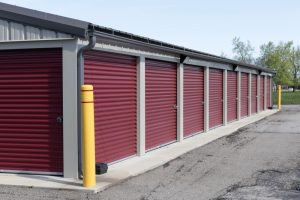
Many people compare monthly parking and self-storage as if they’re interchangeable. In reality, they solve different problems. One is designed to keep your vehicle secure and accessible, while the other helps you free up space by storing belongings you don’t need every day. Knowing which service fits your situation can save you money and prevent you from paying for space you won’t fully use.
You might need somewhere to keep your car while you’re overseas, extra parking near your apartment, or a secure place to store furniture during a move. Business owners may also need space for equipment or inventory that won’t fit at the office. If you need either solution, or even both, Spacer makes it easy to compare monthly parking and self-storage options from local hosts and commercial providers across Australia.
In this guide, we’ll compare monthly parking and self-storage, explain when each option makes sense, and help you choose the one that best suits your needs.
Also Read: How to Choose the Best Long-Term Car Parking: A Practical Guide
At a glance, monthly parking and self-storage both give you extra space for things you can’t keep at home or work. The difference is what they’re designed to store. Monthly parking is for vehicles that need a secure place to stay, while self-storage is for personal or business belongings that aren’t needed every day.
Monthly parking is a long-term parking arrangement where you rent a dedicated or shared parking space on a recurring basis, usually monthly. Depending on the provider, this could be an undercover parking bay, a residential garage, a commercial car park, or an outdoor space suitable for cars, motorcycles, caravans, trailers, or boats.
Self-storage involves renting a secure storage unit for items such as furniture, household goods, business inventory, documents, or seasonal equipment for long-term storage. Storage facilities offer units in different sizes, but they generally aren’t intended for storing registered vehicles unless the facility specifically provides vehicle storage.
Here’s a quick comparison to help you decide which option better suits your needs:
| Feature | Monthly Parking | Self-Storage |
| Primary purpose | Store vehicles securely | Store personal or business belongings |
| Best for | Cars, motorcycles, caravans, boats, trailers | Furniture, boxes, equipment, inventory, documents |
| Accessibility | Often available 24/7, depending on the provider | Varies by facility. Some offer 24/7 access while others have operating hours |
| Security | May include gated access, surveillance cameras, lighting, or lockable garages | Typically includes gated access, CCTV, individual unit locks, and on-site management |
| Permitted items | Registered vehicles and, where allowed, trailers or recreational vehicles | Household items, business goods, and other approved belongings. Hazardous materials such as petrol, paint thinners, gas cylinders, and fireworks, as well as perishables and illegal items, are generally prohibited. |
While there can be some overlap, especially if a storage facility also offers vehicle storage, the right choice comes down to what you need to store. If you’re still unsure, it helps to look at the situations where each option makes the most sense, starting with monthly parking.
Monthly parking is a practical option if you need a secure place to keep your vehicle for weeks or months at a time. Instead of relying on street parking or paying daily rates, you’ll have a dedicated space that’s available whenever you need it. Depending on the location, monthly parking can also be a more cost-effective solution for regular drivers.
Here are some situations where monthly parking makes the most sense:
If your priority is keeping a vehicle secure and accessible, monthly parking is usually the better fit. But if it’s furniture, boxes, business stock, or other belongings taking up valuable space, self-storage is likely the more suitable option.
Spacer connects drivers with thousands of parking listings across Australia, from residential driveways and garages to commercial car parks. Because it’s a peer-to-peer marketplace, you’ll often find more affordable options than traditional parking operators, while still being able to compare locations, features, and pricing before you book.
If you need extra space for belongings rather than a vehicle, self-storage is often the more practical solution. Storage units come in a range of unit sizes, making them suitable for both short-term and long-term use. Many facilities also offer flexible rental periods, so you only pay for the space you need for as long as you need it.
Here are some common situations where self-storage makes sense:
If your goal is to create more space at home or work, self-storage is designed for the job. But if the item you’re looking after is a vehicle, monthly parking offers features and access that are better suited to keeping it secure.
Spacer also lists storage spaces across Australia from both local hosts and commercial providers. The peer-to-peer marketplace gives you access to a wider range of storage types and competitive pricing, making it easier to find a space that suits your belongings, budget, and preferred location
Choosing between monthly parking and self-storage isn’t about which option is better. It’s about what you’re trying to protect. If you need a secure place for your car, motorcycle, caravan, or boat, monthly parking is the right fit. If you’re looking to free up space at home or store furniture, business inventory, or personal belongings, self-storage is designed for that purpose.
In some cases, you may even need both. For example, if you’re moving house, relocating for work, or travelling for an extended period, you might need somewhere to keep your vehicle as well as your belongings. Some providers offer both parking and storage options, making it easier to manage everything in one place instead of dealing with multiple providers.
Before making a decision, consider what you need to store, how often you’ll need access, and your budget. Comparing your options can also help you find the right balance between convenience, security, and cost. With Spacer, you can browse and compare monthly parking and self-storage listings across Australia, making it easier to find a space that suits your needs, location, and budget.
Louise is an SEO Writer for Spacer Technology, creating content for the Parkhound, WhereiPark, Spacer.com.au, and Spacer.com brands. Based in the Philippines, she transitioned from her government office job to copywriting in 2012 and has stayed in content production since.
Louise is an SEO Writer for Spacer Technology, creating content for the Parkhound, WhereiPark, Spacer.com.au, and Spacer.com brands. Based in the Philippines, she transitioned from her government office job to copywriting in 2012 and has stayed in content production since.
Find monthly parking in Canberra’s Civic, Barton and Braddon. Compare parking options, costs, locations and tips for commuters, residents and visitors.

Planning a road trip in Australia? Get practical parking tips for leaving your car safely before you go and finding convenient spots along the way.

Drive safely this winter with practical driving and parking tips for Australian cities. Learn how to handle wet roads, fog, frost, and changing weather conditions.
This will close in 0 seconds
This will close in 0 seconds